
The sky turns that familiar shade of bruised purple, and Illinois residents know the drill. Storm season has officially arrived. While we’ve already discussed deductibles and initial storm preparation recently, two critical developments have emerged this April that fundamentally change the landscape for local homeowners. It’s not just about the wind and hail anymore; it’s about navigating a market where costs are rising and post-storm interactions are now legally restricted.
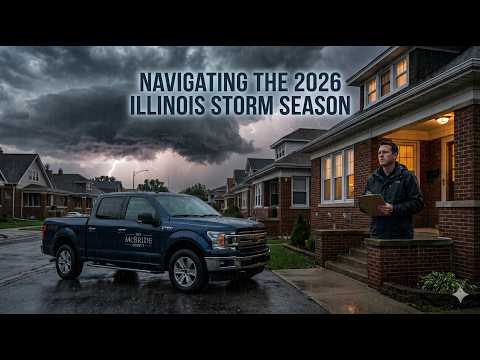
This is not the time for passive ownership. As an independent agent in Illinois, I see the mechanics that drive your premium and the vulnerability that follows a weather disaster. This update addresses why your insurance bill is getting heavier and how a new piece of Illinois legislation (Senate Bill 3029) provides a necessary shield against immediate, aggressive solicitation.
The Silent Catalyst: The Illinois FAIR Plan Rate Hike
If you own a home, you’ve likely felt the squeeze of increasing premiums, but you might not understand why. A primary driver right now is not actually your specific carrier, but the entity designed to be the insurer of last resort: the Illinois FAIR Plan (IFP).
Understanding the IFP and the 11.6 Percent Increase
Starting this month, the Illinois FAIR Plan has raised its homeowners’ insurance rates by a significant 11.6 percent. This plan exists to provide basic property insurance to those who are unable to secure coverage in the voluntary market—essentially, a safety net that the state provides.
While you are likely not insured directly by the state pool, this rate hike impacts your wallet indirectly.
Why the “Market Floor” Matters to Everyone
The Illinois FAIR Plan effectively sets the “market floor” for property insurance in the state. When the floor is raised by 11.6 percent, it creates an upward pressure that ripples through the entire standard carrier market.
Standard, private insurance carriers (the household names) are now operating in an environment where the most basic, high-risk coverage is suddenly nearly 12 percent more expensive. This benchmark allows standard carriers to justify and adjust their own rates upward. We are already seeing some major, standard carriers in Illinois implement devastating 27 percent rate increases. These carriers remain nameless for now, but their internal data mirrors the increased risk the FAIR Plan is reacting to.
Combatting the “Storm Chasers”
The second, and perhaps more immediate, update concerns what happens after the storm has passed. It is common practice for specialized “storm restoration” contractors—often called “storm chasers”—to saturate a neighborhood immediately following a localized hail or wind event. They knock on doors, offer free inspections, and aggressively solicit homeowners to sign contracts and file immediate claims.
The Problem of Predatory Solicitation
This immediate pressure creates a dangerous window. Homeowners are often stressed, concerned about invisible damage to their roof or siding, and are induced to sign documents that may legally bind them or require them to hand over their entire insurance check.
These contractors operate in a high-volume model, pushing claims that may not be necessary or performing temporary, low-quality repairs. This aggressive solicitation tactic is exactly what the new legislation targets.
The 72-Hour Solicitation Ban
Illinois has recently enacted Senate Bill 3029, specifically aimed at creating a protected window of time for homeowners. This new rule prohibits contractors from soliciting repairs—including door-knocking, leaflet dropping, or immediate contract signing—for 72 hours after a disaster proclamation has been issued for an area.
This 72-hour period is a vital cooldown. If an Illinois severe storm system, like the one we just witnessed on Friday and Saturday, prompts a disaster declaration, any contractor knocking on your door on Saturday, Sunday, or Monday to pitch you a contract is likely violating this law.
What a “Predatory Void” Means for Illinois Homeowners
This legislation effectively creates what can be described as a “predatory void.” This phrase doesn’t mean a gap for predators, but rather a void of them. For 72 crucial hours, homeowners are legally protected from the high-pressure sales tactics that often lead to hasty decisions and poor contracts.
Your Rights After an Illinois Storm Event
If a contractor approaches you within that three-day window following a designated disaster, you must understand your position:
- You Are Not Obligated: You have zero obligation to speak to them or sign anything.
- The Solicitation May Be Illegal: The new law makes this immediate solicitation prohibited.
- Take Your Time: Use this time to contact your local, independent insurance agent, not a random contractor.
Why Local Advice Trumps Immediate Contracts
The goal of SB3029 is to allow homeowners time to breathe and seek professional, unbiased counsel. When you sign a contract immediately after a storm, you are operating on emotion and the contractor’s aggressive timeline.
By waiting, you can consult your agent. Your agent can review your specific policy—including your deductibles, which we discussed in detail last week—assess the situation, and help you determine if filing a claim is statistically advisable before you are legally committed to a specific repair company.
Awareness is Your Best Defense
In Illinois, storm season is a meteorological reality, but financial vulnerability doesn’t have to be. The rising rates driven by the Illinois FAIR Plan are a macro-economic force, but understanding their origin helps you anticipate the future of your premium costs.
More importantly, understanding Senate Bill 3029 empowers you with legal protection. Do not let the sound of a doorbell pressure you into making a significant financial or contractual decision the day after a severe weather event. Use the 72-hour void to get local, expert advice. At The McBride Agency, we are here to walk you through that process, ensuring you have the best possible home insurance and you are protected without falling victim to high-pressure tactics.