
Here in Illinois, spring doesn’t just bring flowers; it brings a predictable, turbulent season of weather. March, April, and May are typically our biggest months for severe storms. We see the heavy hail, the intense wind, and the significant damage that these systems deposit across our communities. This predictable pattern creates another predictable outcome: the arrival of storm chasers.
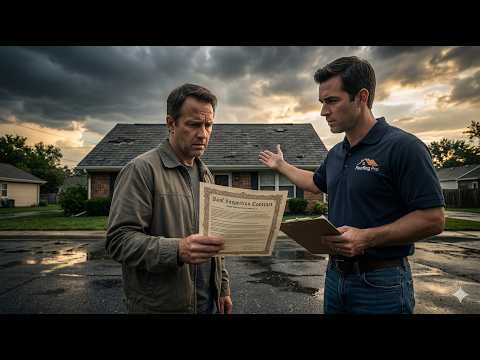
These are the out-of-state or unknown “roofing specialists” who appear in your neighborhood hours after the clouds part. The sales pitch is seductive: “Your neighbor down the street got a new roof covered by insurance because of the hail, and since the same storm hit your house, I’m sure you qualify for a brand-new roof, too. Just sign here, and I’ll handle the rest.”
It’s tempting. The problem is, that contract you just signed makes you legally responsible for the full cost of the roof, regardless of what your insurance company decides. At The McBride Agency, we see this scenario play out too often. We want to make sure you know the difference between a real insurance claim and a financial trap.
The Definition of a Fortuitous Event (The “Cause of Loss”)
For a loss to be covered by standard homeowners insurance in Illinois, there must be a defined cause. Your policy is designed to respond to fortuitous events.
In the context of insurance, fortuitous means an event that is single, unplanned, and unexpected. It is accidental. There must be a recognizable “cause of loss”—a specific instance where the damage occurred. A tornado striking your home is fortuitous. A major hail event denting your siding is fortuitous.
Why Your Old Roof Does Not Qualify
A fortuitous event is fundamentally different from maintenance.
Your homeowners insurance is not, and was never designed to be, a maintenance package for your home. Your roof aging naturally, shingles curling after twenty years of exposure to the sun, or granular loss that has accumulated slowly over a decade—these are all expected maintenance issues. They are not unplanned, sudden, or accidental.
The “Neighbor Logic” Fallacy
When a storm chaser uses the line, “That guy had hail damage, so you do too,” they are ignoring the specifics of your property. Every home is different. The age of your roof, its angle, the presence of protective trees, and even the quality of the original installation all impact how it weathers a storm. You cannot claim insurance coverage based on neighborhood hearsay. An actual event must have occurred specifically on your property, causing a loss that your policy recognizes.
The Storm Chaser Contract: Why You Are Now on the Hook
When you sign the contract the salesman hands you on your doorstep, you are not just authorizing an inspection. You are signing a legally binding agreement to pay for a new roof.
The salesman’s assurance that “your insurance company will cover it” is not a contractual guarantee. Their primary business is selling roofs and securing contracts; they are not insurance coverage experts. Once that roof is installed, you are obligated to pay for it.
What Happens When Your Claim is Denied?
If the Illinois insurance carrier inspects your roof and determines that the damage is normal wear-and-tear and not caused by a single, fortuitous event, they will deny the claim. Your policy will not pay.
Suddenly, you are responsible for the full scope of a replacement—whether that’s a twenty-five, thirty, or even thirty-five thousand dollar roof. That salesman you trusted has moved on to the next storm-damaged town, but your contract remains. This financial burden is now your reality.
The True Cost of “Easy” Financing
When the expected insurance money fails to materialize, how will you pay for that new roof? Many predatory roofing companies offer their own financing, but often at incredibly high interest rates.
I know of Illinois homeowners who have been paying for a twenty thousand dollar roof for three years, and because of high interest, they have only reduced their principal balance by two thousand dollars. What should have been manageable—or covered, if it were a legitimate claim—has become a long-term financial nightmare because they trusted a stranger’s interpretation of their insurance policy.
Navigating Real Events: Covered Perils vs. Maintenance
This entire situation often stems from a lack of clarity about what homeowners insurance actually covers.
Defining Covered Perils
A covered peril is a specific risk or cause of loss listed in your policy, such as fire, lightning, explosion, windstorm, or hail. Whether the chaser sold you a new roof or not, the critical question is: What was the cause of loss?
If a real wind or hail event occurred, your policy should respond. But your claims adjuster will be looking for fortuitous damage from that specific storm. They are trained to distinguish that sudden damage from signs of prior neglect, such as:
- Aging and general roof deterioration.
- Pre-existing curling, lifting, buckling, or cracking.
- Widespread, long-term granular loss that occurred before the single event.
If your roof was not in good shape before the storm, the carrier cannot be expected to replace it because an event simply provided an opportunity for a slick salesperson.
Understanding Your Illinois Wind and Hail Deductibles
The landscape of homeowners insurance is changing. Many, if not the majority, of carriers are moving to split deductibles. You must understand this difference before filing a storm claim.
Standard All-Peril vs. Wind and Hail
Most policies have an all-peril deductible (e.g., $1,000). This applies to things like fire, theft, or a burst pipe. However, insurers are now applying a separate, often much higher, deductible specifically for damage caused by wind and hail.
The Percent-Based Deductible Danger
A common structure is a percentage-based deductible for wind/hail events. It is critical to understand what that percentage is based on.
It is not one percent of the claim. It is 1% of your actual dwelling replacement cost (the Coverage A limit listed on your policy declarations).
Example: If your Illinois home is insured for $400,000, and you have a 1% wind/hail deductible, you are responsible for the first $4,000 of any wind/hail claim. If that roof replacement the chaser quoted costs $15,000, and your insurance company approves the claim, your insurance payment will be $11,000. You must provide the $4,000 difference out-of-pocket, as required by your contract. This is why you must understand your deductibles before an event happens.
Final Takeaway
Don’t let a seasonal storm make you a target for financial predatory behavior. If an individual you’ve never met knocks on your door claiming your insurance will pay for a free roof, be extremely skeptical. Before you sign anything, consult with a professional who is licensed to interpret your contract and assess whether a fortuitous event truly occurred.
Your Illinois home is likely your largest asset. Protect it, and protect your finances, by having a real conversation about maintenance and the true design of your coverage.
Questions about your coverage? Contact The McBride Agency today.